


Introduction
Let’s answer the question: “What is love?”
Love is one of the most powerful human experiences, making us feel joy, excitement, and deep connection with others. This naturally raises the question of what love really is and why it affects us so deeply.
The Biology of Love
Love begins in the brain, where a complex cocktail of chemicals drives our feelings and behaviors. Dopamine fuels the excitement and pleasure of attraction, giving us that “butterflies in the stomach” sensation. Oxytocin, sometimes called the “cuddle hormone,” and vasopressin promote trust, bonding, and long-term attachment. This is why new love can feel thrilling and all-consuming, while long-term love often feels calm, secure, and deeply satisfying.
From an evolutionary perspective, love is essential for survival. Physical attraction encourages reproduction, while emotional bonds encourage parents to stay together long enough to raise children successfully. In this sense, love is both an emotion we feel and a biological strategy that has helped humans endure and thrive. The brain and heart may seem separate, but in love, they are inseparably linked.
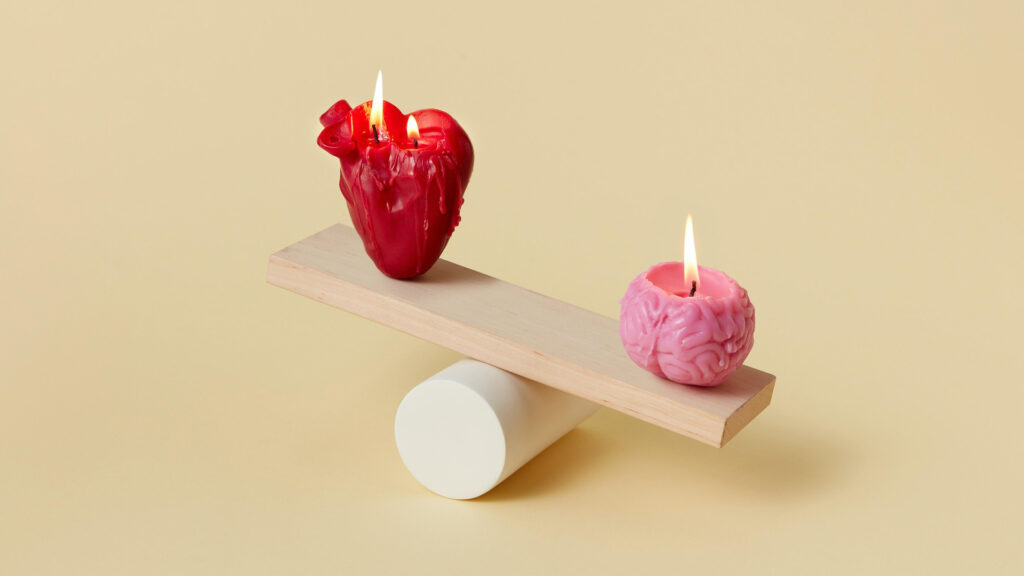
Image by mehmeteminelmaoglu via Pixabay (Pixabay Content License).
The Psychology of Love
Love is more than just chemistry. Psychologists often describe love using three key components: intimacy, passion, and commitment. Intimacy involves emotional closeness, trust, and sharing one’s true self. Passion is the desire and physical attraction that can set hearts racing. Commitment is the conscious choice to maintain a connection over time through ups and downs. Different combinations of these elements create distinct experiences of love:
- Intimacy Only (Liking): A deep friendship where two people share personal thoughts, trust each other, and feel emotionally close, but there’s no romantic or physical attraction. Example: Two best friends who confide in each other about everything but don’t have romantic feelings.
- Passion Only (Infatuation): An intense physical attraction or “crush” that feels exciting and consuming, but lacks deeper emotional connection or long-term intention. Example: A whirlwind attraction to someone you just met, where everything feels thrilling but you barely know each other.
- Commitment Only (Empty Love): A relationship that continues out of obligation or decision, without emotional closeness or physical desire. Example: A long-term marriage where the partners stay together for practical reasons (like family or history), even though the emotional and romantic spark is gone.
- Intimacy + Passion (Romantic Love): Emotional closeness combined with strong attraction, but without long-term commitment yet. Example: A couple early in a relationship who feel deeply connected and attracted, but haven’t made long-term plans.
- Intimacy + Commitment (Companionate Love): A stable, caring bond without strong physical passion. Example: Long-term partners or elderly couples who deeply trust and support each other, even if the initial spark has faded.
- Passion + Commitment (Fatuous Love): A quick commitment driven mainly by attraction, without truly knowing each other. Example: A couple who rush into marriage after a short, intense romance without building emotional depth.
- Intimacy + Passion + Commitment (Consummate Love): The “complete” form of love, balancing emotional closeness, physical attraction, and long-term dedication. Example: A healthy, lasting romantic relationship where partners feel connected, attracted, and committed through life’s ups and downs.
- No Intimacy + No Passion + No Commitment (Nonlove): This is basically everyday, neutral interactions. Example: Talking to a stranger in a store or passing someone on the street with no intimacy, passion, or commitment.
Long-lasting romantic love usually involves a balance of all three, creating both excitement and stability. Childhood experiences also play a critical role. People nurtured in warm, secure environments may find it easier to trust and open their hearts, while those with inconsistent care may approach love with caution or fear of abandonment.

Image by alllessandro_ via Pixabay (Pixabay Content License).
Love and Society
Love doesn’t exist on its own. It is shaped by the culture we live in. Around the world, ideas about dating, marriage, and showing feelings can be very different. In some places, love is seen as something you should have before marriage. In others, practical reasons come first, and love is expected to grow over time.
Movies, books, and social media also shape how we see love, often making it look easy, intense, or magical. But real life is different. Love takes effort, understanding, and care. These things may not seem exciting, but they are what make relationships last.

Image by OlcayErtem via Pixabay (Pixabay Content License).
How Love Changes Over Time
Love changes over time. The excitement of early attraction often grows into a deeper feeling of connection, friendship, and shared purpose. While the strong passion may become less intense, it is replaced by a stronger bond built on trust, comfort, and shared experiences.
Healthy love grows when couples face challenges together, celebrate good moments, and talk openly with each other. Conflict will always happen, but how partners deal with it can either strengthen or weaken their relationship.
Real love is not a fixed feeling. It is a process that grows, changes, and matures over time.

Image by sasint via Pixabay (Pixabay Content License).
Why Love Matters
Love is important for human well-being. People with strong emotional bonds are often happier, healthier, and may even live longer. Love gives us a sense of belonging, safety, and purpose, and helps us feel seen, valued, and understood.
Importantly, love is not just something that happens to us. It is something we actively build through attention, empathy, and effort. By caring for others, building trust, and staying connected, we allow love to grow in our lives. In the end, love is both what brings us together and what helps us grow as people.

Image by scottwebb via Pixabay (Pixabay Content License).
Conclusion
Thank you for reading this article! We hope the information was helpful to you and answered your questions.
We would love to hear your thoughts. What role does love play in your life, and who helps you feel it most? Let us know in the comments.
And remember, there is more content on Huxeo for you to explore, discover, and learn. Be sure to check it out!