


Warning
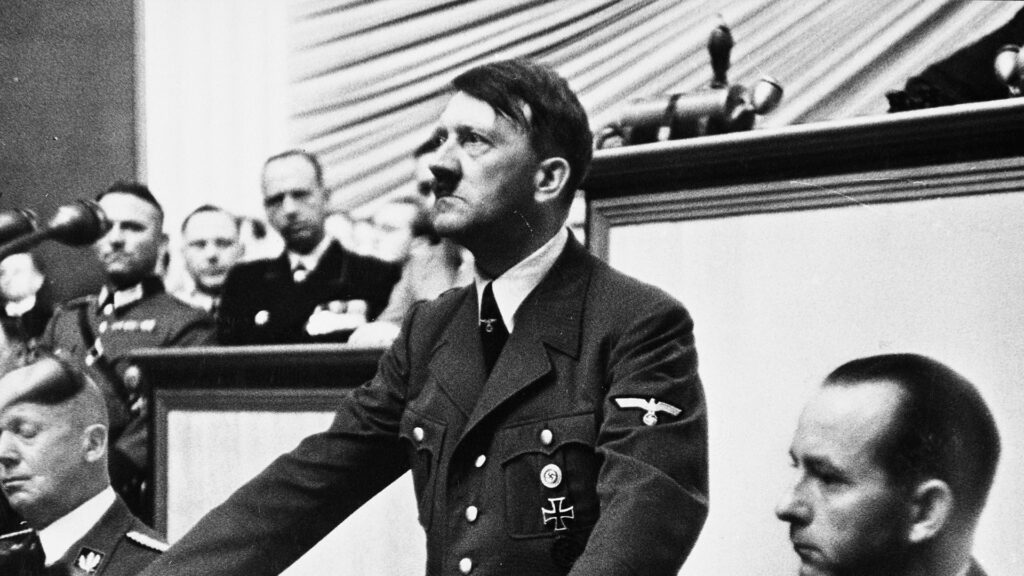
This article is intended for educational purposes and historical understanding. Adolf Hitler was a dictator whose actions caused the deaths of millions, including the genocide of six million Jews in the Holocaust. He promoted hatred, violence, and extreme ideologies that devastated Europe and the world. This content does not support, glorify, or justify his beliefs or actions in any way. The intent is for readers to learn lessons from history. For more details, look at the Huxeo disclaimer.
Introduction
Let’s answer the question: “How did Adolf Hitler rise to power?”
Adolf Hitler’s rise to power in Germany is one of the most shocking and important stories in modern history. Understanding how he gained power helps explain how problems in politics, the economy, and society can allow extreme leaders to take control.
Early Life and Personal Experiences
Adolf Hitler was born in Austria in 1889. His father, Alois Hitler, was strict and demanding, which created tension in the household. Alois died in 1903 when Adolf was thirteen. His mother, Klara, was caring and supportive, but she died of breast cancer in 1907 when he was eighteen. These losses affected him deeply.
As a young man, Hitler moved to Vienna to pursue art, but he failed to gain entry to art school and lived in poverty. During this time, he read newspapers and books that promoted nationalist and antisemitic ideas, which influenced his thinking and shaped his later beliefs.
These early experiences left Hitler frustrated and resentful. Historians often see this period as important in shaping his worldview and his later turn to politics, where he tried to reshape society according to his ideas.
Economic Problems in Germany
After World War One, Germany faced severe economic problems. The Treaty of Versailles forced Germany to pay large reparations, which put heavy pressure on the economy. Inflation became extreme, causing money to lose its value and many families to lose their savings. Unemployment rose, and people struggled to afford basic needs like food and housing.
The Weimar Republic (named after the city of Weimar, where its constitution was written in 1919 because Berlin was in turmoil after World War I) was a democratic government, but it was weak and often changed leadership. As a result, many citizens lost trust in democracy and began to want stronger leadership. Hitler promised to rebuild Germany, create jobs, and restore national pride. He also blamed other countries and minority groups for Germany’s problems.
Because life was so difficult, many people were willing to support someone who offered hope and simple solutions. Hitler linked economic recovery with national strength, which helped increase his popularity.
Early Political Involvement
In 1919, Hitler joined the German Workers’ Party, which later became the Nazi Party. His speaking ability and strong opinions helped him rise quickly within the party.
In 1923, Hitler attempted to take power in Munich in an event known as the Beer Hall Putsch. The attempt failed and he was arrested. While in prison, he wrote Mein Kampf, where he described his beliefs and future plans.
After his release in 1924, after serving about nine months of a five-year sentence because the court saw the Beer Hall Putsch as a poorly organised political coup and was relatively lenient toward right-wing extremists at the time, Hitler decided to pursue power through legal political means. He rebuilt the Nazi Party and focused on gaining support through elections.
Political Tactics and the Nazi Party
Hitler and the Nazi Party used organized political strategies. They participated in elections and formed alliances with other groups. They also created organizations for workers, veterans, and young people. These groups gave supporters a sense of belonging.
The Nazis took advantage of weaknesses in the democratic system. Frequent leadership changes made Hitler appear strong and stable. By gaining influence in local governments, the military, and parts of society, the party expanded its power.
Hitler adjusted his message for different audiences. He promised workers employment, veterans respect, and business owners protection. This approach helped him gain broad support.
Propaganda and Public Messages
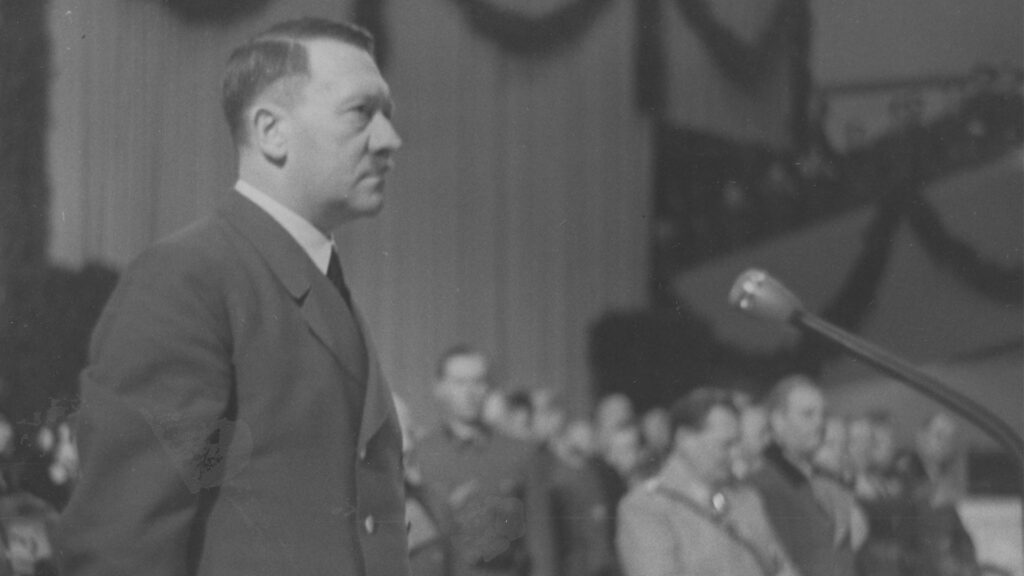
Propaganda played a major role in Hitler’s rise. He was a powerful speaker who used emotional language about pride and national unity. He also blamed certain groups for Germany’s problems, which helped direct public anger.
The Nazi Party spread its ideas through newspapers, posters, films, and large rallies. Repeated messaging made these ideas more familiar and widely accepted. Rallies created excitement and a sense of unity, making people feel part of a larger movement. This helped strengthen loyalty to Hitler and the Nazi Party.
Via Wikimedia Commons (Public Domain).
Key Events Leading to Dictatorship
By the early 1930s, the Nazi Party gained many seats in the Reichstag as Germany suffered from economic problems and unemployment. This growing support increased Hitler’s influence within the political system.
On 30 January 1933, President Paul von Hindenburg appointed Hitler as Chancellor, believing he could be controlled and help stabilise Germany. In February 1933, the Reichstag building burned. Hitler used this event to convince the government that emergency powers were needed to deal with a supposed communist threat. In March 1933, the Enabling Act was passed, allowing him to make laws without parliamentary approval, which effectively weakened democracy.
After Hindenburg died in August 1934, Hitler combined the roles of president and chancellor, becoming Germany’s Führer (leader). From this point, he had total control. He removed political rivals in a process known as the “Night of the Long Knives” and increased control over the media, education, and youth organisations to shape public opinion and maintain power.
Social Support and Mass Appeal
Hitler gained support because he offered simple answers to complex problems. Many Germans feared communism, were struggling economically, and wanted to restore national pride. Hitler promised strong leadership and stability.
Youth groups and social organisations helped build loyalty. Children and teenagers were taught to admire Hitler, while adults were encouraged to take part in rallies and party activities. Feeling part of a shared national movement increased support for him and the Nazi Party.
Conclusion
Thank you for reading this article! We hope the information was helpful to you and answered your questions.
We would love to hear your thoughts. What do you think was the main reason Hitler was able to gain power, and how could similar situations be avoided today? Let us know in the comments.
And remember, there is more content on Huxeo for you to explore, discover, and learn. Be sure to check it out!