


Introduction
Let’s answer the question: “What was the story of the Titanic and how did it sink?”
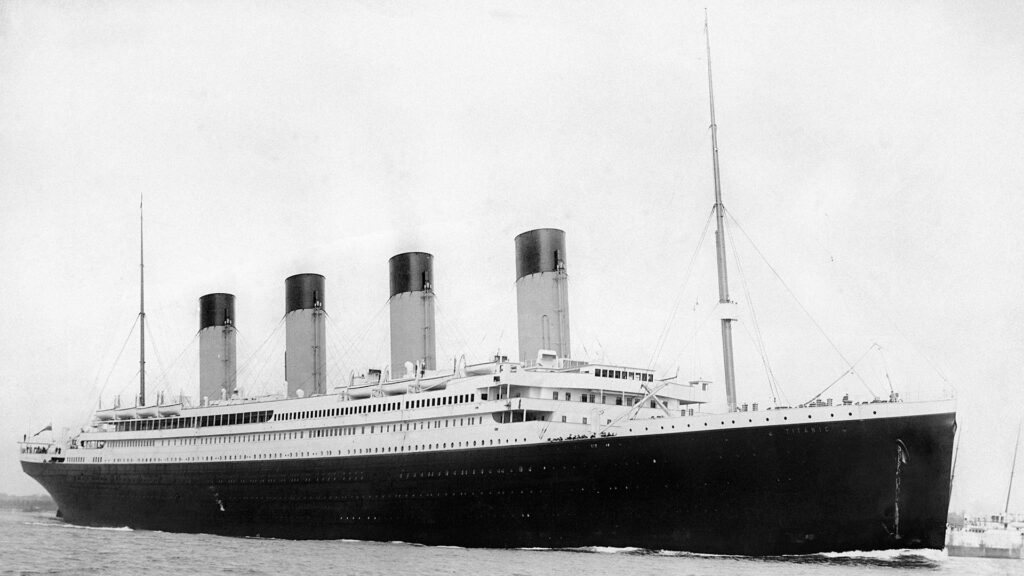
The Titanic was one of the most famous ships in history and was known for its luxury, modern design, and size. When it was built, many people believed it was one of the safest ships ever made.
Why the Titanic Was Built
The Titanic was built by the British shipping company White Star Line as part of a plan to compete with rival ocean liners, especially those operated by Cunard. Instead of trying to build the fastest ship, White Star Line decided to focus on size, luxury, and comfort. The goal was to attract wealthy passengers who wanted a smooth, elegant crossing between Europe and America. Titanic was designed to be one of three large Olympic-class liners that would dominate the North Atlantic passenger trade.
Another priority was safety and modern engineering. The ship was built with 16 watertight compartments and electrically operated watertight doors, which many believed made it extremely safe. While it was never officially called “unsinkable” by the company, the design led to strong public confidence in its strength. The ship was intended to showcase British shipbuilding power and serve as a floating symbol of industrial progress in the early 20th century.

Image by Robert Welch via Wikimedia Commons (Public Domain).

Building the Titanic
Titanic was constructed at the Harland and Wolff shipyard in Belfast. Construction began in 1909. The hull was built using thousands of steel plates held together by more than three million rivets. At the time, it was one of the largest moving objects ever made by humans. More than 14,000 workers helped build the ship, and the project took about three years to complete.
The ship was launched on May 31, 1911, and then fitted out for nearly a year. During this time, engines, boilers, and funnels were installed along with the luxurious interior. Titanic was powered by two massive reciprocating steam engines and a steam turbine, driving three propellers. It measured about 269 metres (882 feet) and weighed over 46,000 tons. When completed in early 1912, it was one of the largest and most luxurious ships in the world.
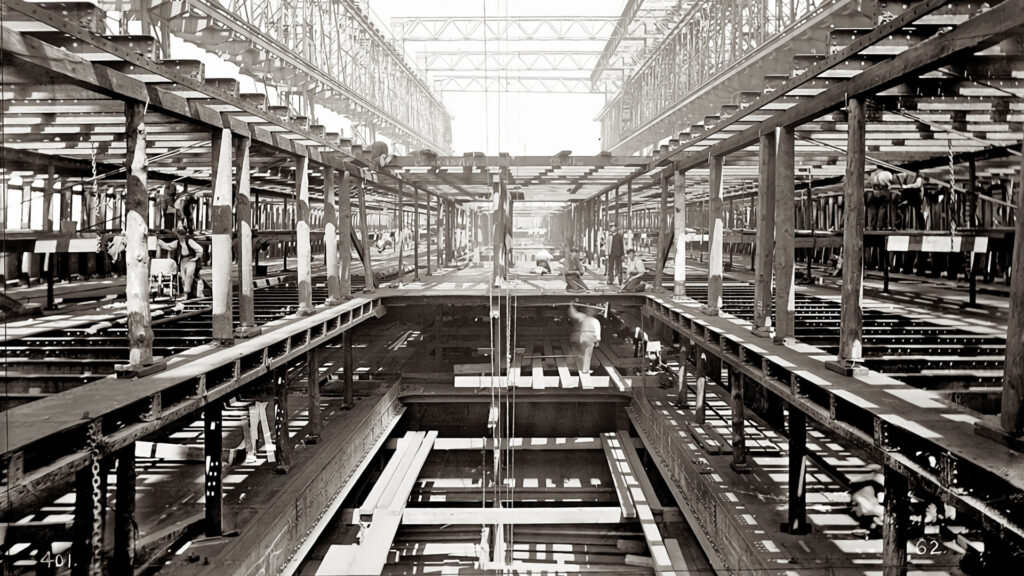
Image by Robert Welch via Wikimedia Commons (Public Domain).

The Start of the Maiden Voyage
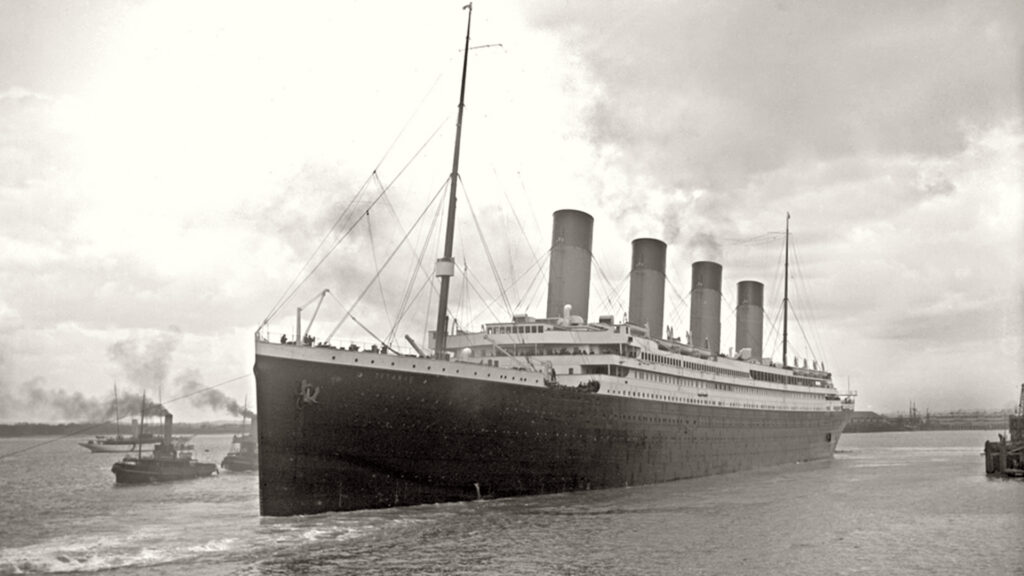
Titanic began its maiden voyage on April 10, 1912, departing from Southampton. It was commanded by Captain Edward Smith, an experienced and respected officer. The ship first stopped at Cherbourg, France, and then at Queenstown (now Cobh), Ireland, to pick up additional passengers before heading into the open Atlantic.
There were about 2,224 people on board, including passengers and crew. The ship carried some of the wealthiest people in the world, as well as emigrants seeking a new life in America. Titanic was bound for New York City. The atmosphere on board was calm and confident. Many passengers enjoyed the ship’s grand staircase, dining rooms, Turkish baths, and other first-class facilities, while third-class passengers had accommodations considered good for the time.
Via Wikimedia Commons (Public Domain).


Ice Warnings in the Atlantic
As Titanic entered the North Atlantic, it began receiving wireless ice warnings from other ships. The wireless operators passed several of these messages to the bridge. Ice had been reported along the shipping lanes, including large icebergs and pack ice. However, iceberg sightings were common during that season, and ships were expected to proceed carefully while continuing their voyages.
On April 14, 1912, several warnings were received, including one from the SS Californian, which reported being stopped by heavy ice. Not all messages were treated with the same urgency. Titanic continued traveling at about 22 knots, near its top speed. The night was very cold and unusually calm, making it harder to spot icebergs because no waves were breaking at their bases.
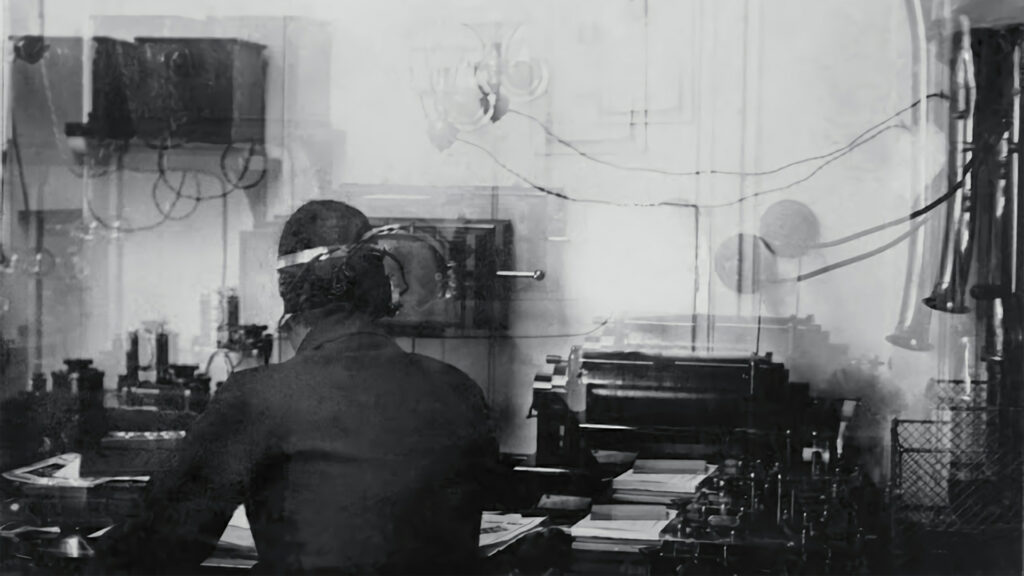
Image by Francis Browne via Wikimedia Commons (Public Domain).

The Collision With the Iceberg
At 11:40 p.m. on April 14, lookouts in the crow’s nest spotted an iceberg directly ahead. They rang the warning bell and telephoned the bridge. First Officer William Murdoch ordered hard a starboard, turning the ship to port, and also ordered the engines reversed. The ship began to turn, but it was too close to avoid contact completely.
The iceberg scraped along the starboard side of the hull for several seconds. The impact did not feel severe to many passengers, but it caused serious damage below the waterline. At least five of the watertight compartments were opened to the sea. Titanic had been designed to stay afloat with up to four flooded compartments, but not five. Water began to pour in, and the ship’s fate was sealed within minutes of the collision.
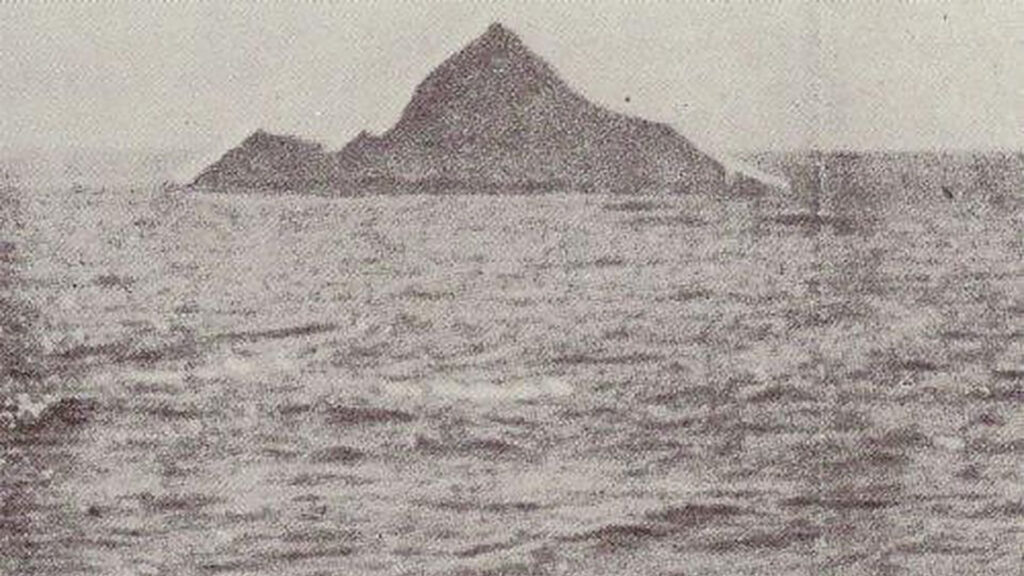
Image by crew of SS Birma via Wikimedia Commons (Public Domain).

Lifeboats and Evacuation
Titanic carried 20 lifeboats: 14 standard wooden lifeboats, 4 collapsible canvas-sided lifeboats, and 2 emergency cutters. Together, they could carry about 1,178 people, which was far fewer than the 2,224 people on board. However, the ship met the legal requirements of the time, which were based on outdated tonnage rules that had not kept pace with increasing ship size.
The order to load lifeboats began after midnight. The rule of “women and children first” was generally followed, especially on the port side. Many lifeboats were lowered only partially filled because passengers were hesitant to leave the ship at first. Crew members had little training in large-scale evacuations. As the bow sank lower, launching the remaining lifeboats became more difficult. The last lifeboats left shortly before the final plunge.
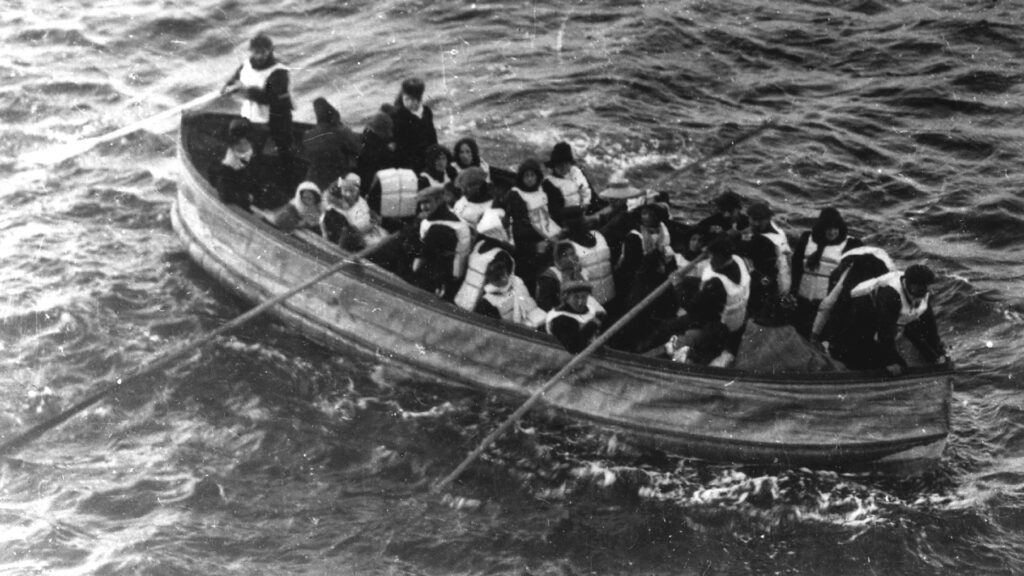
Image by J.W. Barker (Carpathia passenger) via Wikimedia Commons (Public Domain).


The Sinking of the Titanic
As water filled the forward compartments, the bow sank deeper into the ocean. The ship’s pumps worked to slow the flooding but could not stop it. Around 2:00 a.m., the bow was heavily submerged, and the stern began to rise out of the water. Lights on board remained on until shortly before the end, powered by the ship’s generators.
At approximately 2:20 a.m. on April 15, 1912, the ship broke apart between the third and fourth funnels due to extreme structural stress. The bow section sank first, followed by the stern, which briefly settled back before rising again and then descending almost vertically. The entire sinking process lasted about 2 hours and 40 minutes from the time of collision. More than 1,500 people died, mainly from exposure to the freezing water, which was below 0°C (32°F).
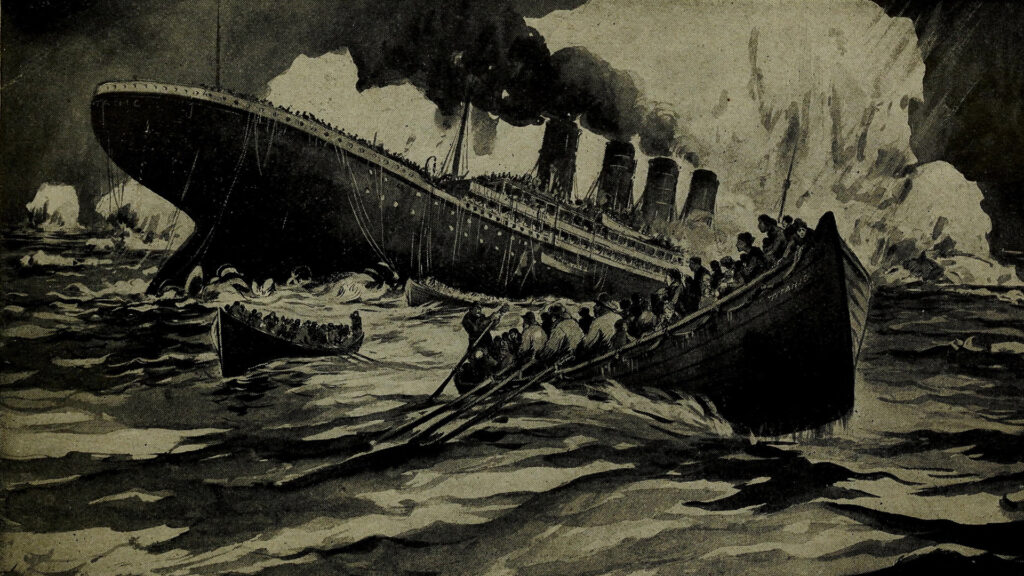
Via Wikimedia Commons (Public Domain).


The Aftermath and Legacy
Out of about 2,224 people on board, approximately 710 survived. The rescue ship RMS Carpathia arrived around 4:00 a.m. and picked up survivors from the lifeboats. The disaster caused shock around the world. Investigations were held in both the United States and Britain to determine what had gone wrong.
The true legacy of the disaster was major reform in maritime safety. In 1914, the International Convention for the Safety of Life at Sea (SOLAS) was created. It required enough lifeboats for all passengers, regular lifeboat drills, and continuous radio watches. The International Ice Patrol was also established to monitor ice conditions in the North Atlantic. These changes permanently improved safety at sea.
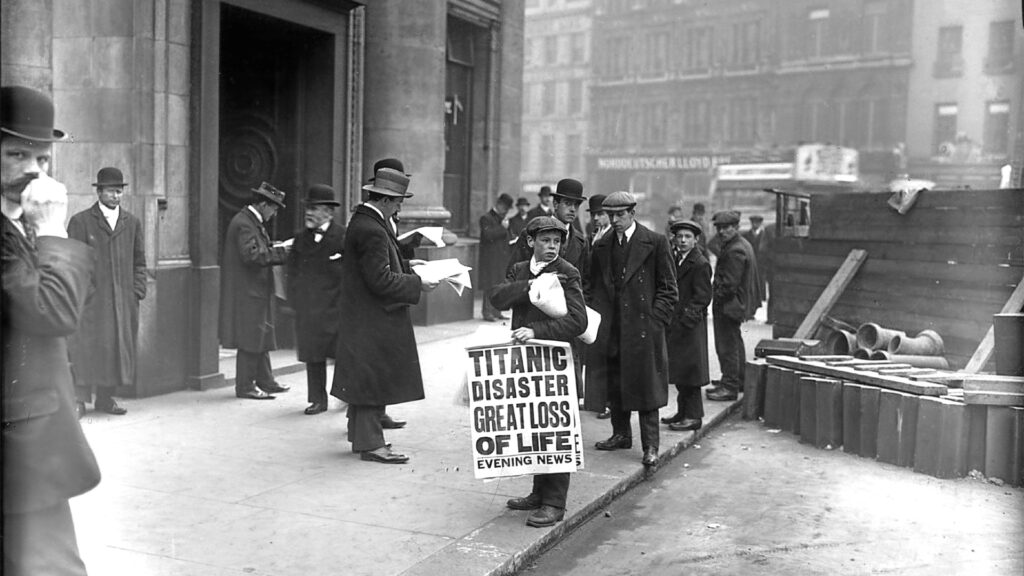
Via Wikimedia Commons (Public Domain).

Where the Titanic Is Today
The wreck of Titanic lies about 3,800 metres (12,500 feet) below the surface of the North Atlantic Ocean. It is located roughly 600 kilometres (370 miles) off the coast of Newfoundland, Canada. The wreck was discovered in 1985 by a joint American-French expedition led by oceanographer Robert Ballard.
The ship rests in two main sections on the ocean floor, separated by about 600 metres (2,000 feet). The bow is relatively intact, while the stern is heavily damaged and collapsed from the violent breakup and impact with the seabed. Over time, bacteria have slowly consumed the iron hull, forming rust structures known as rusticles. The wreck continues to deteriorate and will eventually collapse further, but it remains one of the most studied and significant shipwrecks in history.
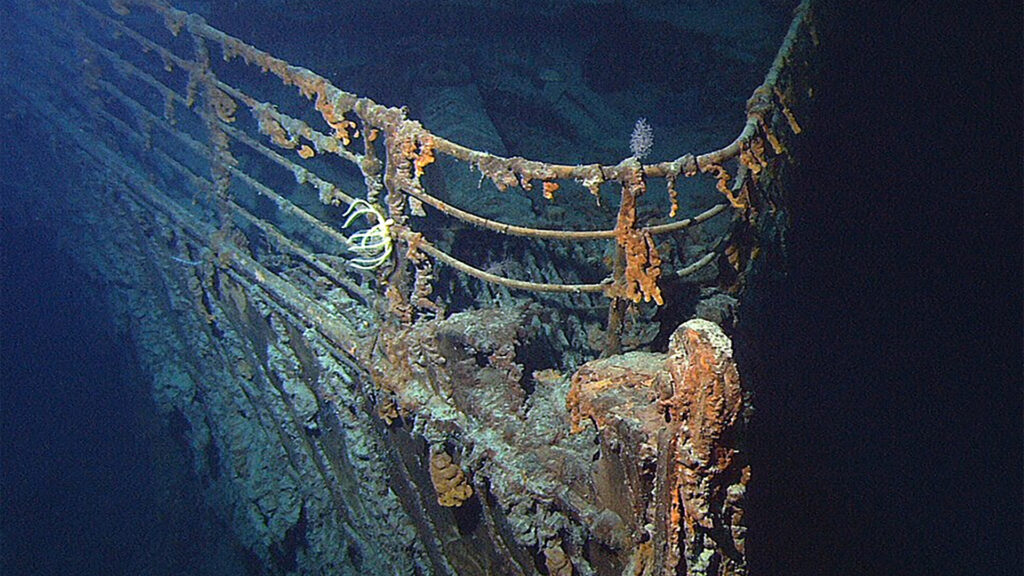
Image by NOAA/Institute for Exploration/University of Rhode Island (NOAA/IFE/URI) via Wikimedia Commons (Public Domain).

Conclusion
Thank you for reading this article! We hope the information was helpful to you and answered your questions.
We would love to hear your thoughts. What caught your interest in Titanic’s story, and are there any cool facts or details you find especially interesting? Let us know in the comments.
You can also take our quiz to see what you’ve learned.
And remember, there is more content on Huxeo for you to explore, discover, and learn. Be sure to check it out!